
- How to Select a Powder Coating Booth for Industrial Production
- How to Choose an Automatic Powder Coating Line Based on Production Capacity
- How to Choose the Right Powder Coating System for Metal Parts: Key Buying Decisions
- Manual vs. Automatic Powder Coating Lines: When Is Automation Worth the Investment?
- What Size Powder Coating Line Do You Need? How to Match Equipment Investment to Production Demand
phone:+8618533267656
WhatsApp:+8618032661886
Email:info@powder-coatingline.com
Address:No. 55, Airport Road, Changshou Street, Xinle City, Shijiazhuang, Hebei Province
How to Choose the Right Powder Coating System for Metal Parts: Key Buying Decisions
Choosing a powder coating system for metal parts is not simply a matter of selecting a spray booth and curing oven. The system must match the products being coated, the required production output, the coating specifications, and the way the factory operates.
A configuration that works well for small brackets may be inefficient for large steel cabinets or heavy fabricated components. Likewise, a highly automated line may reduce manual spraying work but offer limited economic benefits if production volumes are low or product changes are frequent.
The most reliable purchasing decision starts with the production requirements and works backward to the equipment configuration.

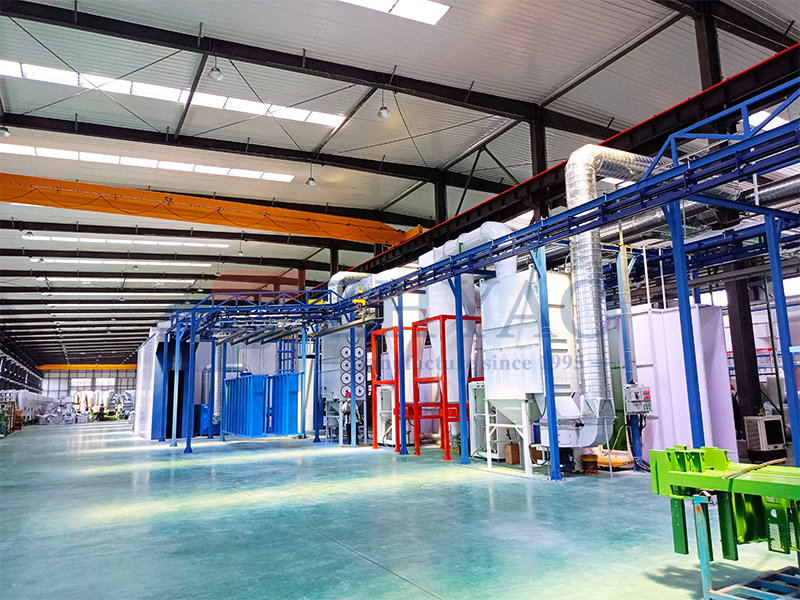
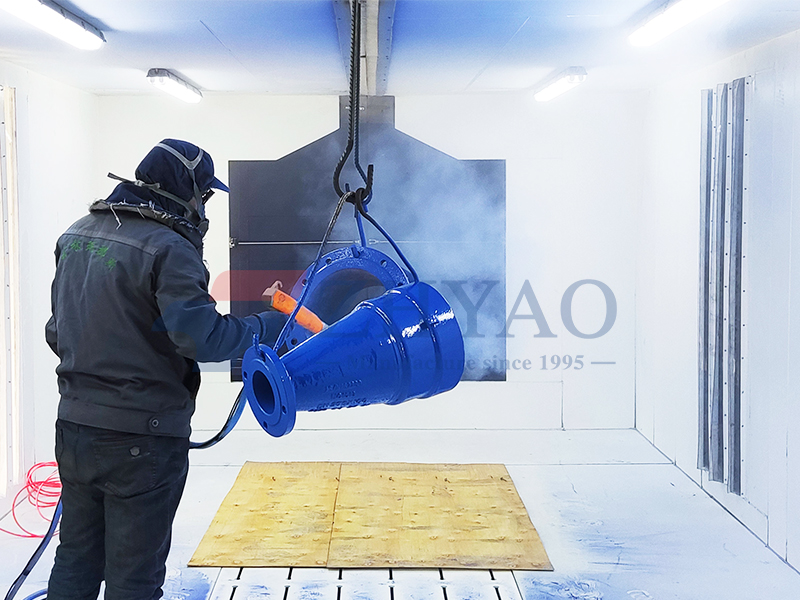
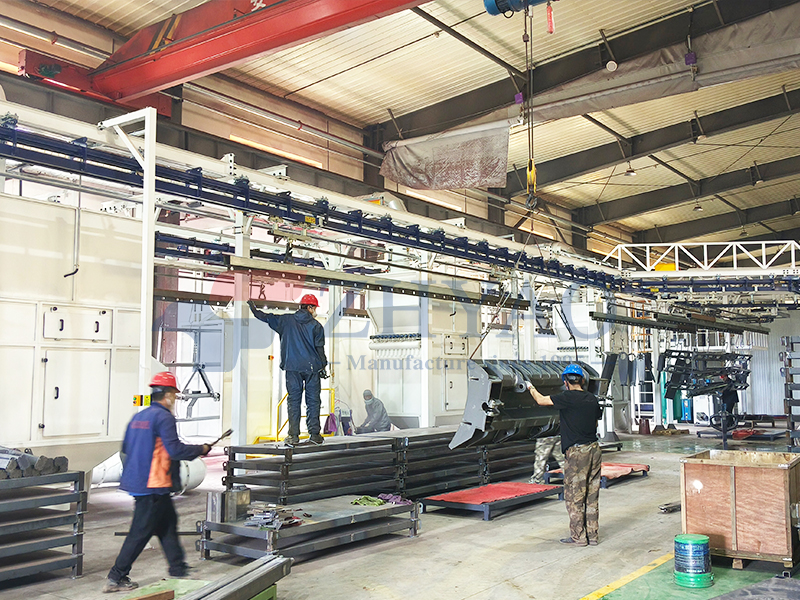
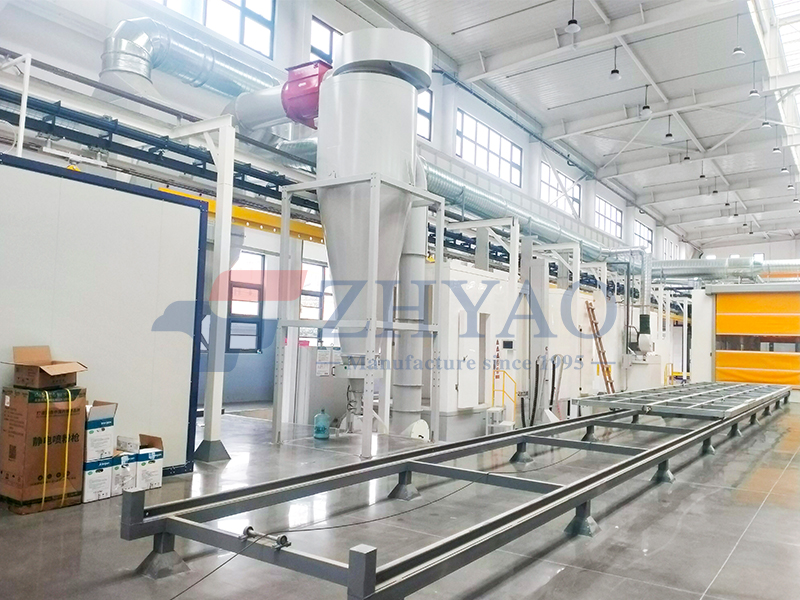
(ZHYAO Spraying Equipment Installation Site)
1. Define the Range of Metal Parts Before Comparing Equipment
The first step is to identify which products the system must handle, including both typical parts and the most demanding items.
Important details include:
Maximum length, width, and height
Maximum workpiece weight
Base material, such as carbon steel, galvanized steel, or aluminum
Part geometry, including recesses, narrow gaps, welded joints, and internal corners
Required coating appearance, thickness, and corrosion resistance
Expected product changes over the coming years
These factors affect more than the dimensions of the spray booth.
Large or heavy components may require stronger hangers, suitable conveyor structures, and sufficient clearance throughout the line. Complex geometries may need adjustments to spray gun positioning, fixture design, or a combination of automatic spraying and manual touch-up.
Material and coating requirements also influence the pretreatment process and curing conditions. For example, aluminum and steel components may require different pretreatment approaches, while thick metal parts generally heat up more slowly than thin sheet metal parts.
Before requesting a quotation, prepare a representative product list rather than designing the system around just one easy-to-coat component.
2. Match the System Configuration to Actual Production Volume
Production volume determines whether a batch, semi-automatic, or fully automatic powder coating system is appropriate.
The decision should consider not only the number of parts produced per day, but also their size, surface area, processing time, and production mix.
A batch system can be suitable for lower-volume production, customized products, or workshops that process many different part types. It allows operators to handle different jobs without committing to a continuous production sequence.
A semi-automatic system may be more appropriate when production is relatively stable but operators still need flexibility for different product sizes, manual spraying, or occasional touch-up.
A fully automatic powder coating line is worth evaluating when production volumes are high enough, product specifications are sufficiently repeatable, and labor-intensive operations create a persistent bottleneck.
However, automation does not automatically guarantee a lower cost per part. Loading, unloading, fixture changes, cleaning, maintenance, and product changeovers still affect the practical output.
The key purchasing question is: How much qualified production output does the factory need under normal operating conditions?
A supplier should evaluate the entire process rather than calculate capacity from conveyor speed or spray gun quantity alone.
3. Choose Automation According to the Production Mix
Automation should solve a defined production problem, not simply increase the equipment specification.
For products with consistent dimensions and repeatable coating requirements, automatic spray guns and reciprocators can provide more consistent coverage and reduce repetitive manual spraying.
For complex metal parts with deep recesses, narrow gaps, or difficult-to-reach areas, automatic spraying may need to be combined with manual touch-up. The result depends on the part geometry, gun arrangement, electrostatic settings, and the coating requirements.
For factories producing many product types in small batches, excessive automation can introduce additional fixture requirements, programming work, setup time, and maintenance costs.
When evaluating automation options, consider:
How much of the product range can be coated automatically
Whether manual touch-up will still be required
How often fixtures or spray programs must change
Whether the production volume justifies the investment
How much flexibility will be needed for future products
The best configuration is the one that automates repeatable work while preserving sufficient flexibility for the factory's actual product mix.

4. Evaluate the Complete Process, Not Individual Machines
A powder coating system usually involves several connected stages, such as pretreatment, drying, powder application, curing, and workpiece transportation. The exact configuration depends on the substrate, coating specification, production method, and available factory space.
These stages must be designed to work together.
For example, increasing conveyor speed may raise the theoretical output, but it also changes the available spraying time and the curing oven's required residence time. If the oven cannot provide the specified curing conditions at the new speed, coating quality may suffer.
Similarly, a spray booth with sufficient space does not guarantee good production performance if the conveyor arrangement makes loading difficult or if the curing oven becomes the main bottleneck.
Pretreatment also deserves careful consideration. A coating system cannot compensate for an unsuitable surface preparation process simply by using more advanced spray equipment. The required cleaning and conversion process should reflect the substrate, contamination level, and corrosion-resistance target.
When reviewing a supplier's proposal, assess the compatibility of the complete process, including:
Pretreatment method and required treatment stages
Drying capacity and moisture removal
Spray equipment and workpiece coverage
Powder recovery and color-change requirements
Curing conditions based on the powder manufacturer's specifications
Conveyor capacity, loading arrangements, and material flow
A balanced system is generally more valuable than a collection of individually impressive machines.
5. Consider Color Changes and Product Flexibility
Color-change frequency can significantly affect practical production capacity.
A factory that produces one color for long production runs has different requirements from a factory that changes colors several times per shift.
Frequent color changes can increase booth cleaning time, powder loss, labor requirements, and the risk of cross-color contamination. These factors should be included in the operating-cost calculation.
Depending on the production schedule, a buyer may consider a booth designed for easier cleaning, an appropriate powder recovery arrangement, or separate spraying areas for frequently used colors.
However, the most expensive color-change system is not necessarily the best investment. If the factory runs a limited range of colors for long periods, a simpler configuration may be more economical.
Ask the supplier to estimate the expected cleaning and changeover time under the intended production conditions. Clarify what the estimate includes, such as cleaning the booth, spray guns, powder hoses, feed equipment, and recovery components.
6. Compare Total Operating Costs, Not Just Purchase Prices
Two powder coating systems with similar production targets can have substantially different investment and operating requirements.
The initial quotation is only one part of the decision. Buyers should also evaluate:
Labor requirements and practical production capacity
Powder consumption and recoverable overspray
Energy consumption during drying and curing
Maintenance requirements and spare-parts availability
Cleaning time and production downtime
Installation, commissioning, and operator training
Future capacity expansion or product changes
Energy consumption should be assessed in relation to the required process conditions and actual production output. A larger oven, for example, may be necessary for heavy parts or a higher throughput, but its operating cost depends on the oven design, insulation, heating method, loading pattern, and operating schedule.
Powder recovery also needs a realistic assessment. The quantity of powder collected is not necessarily the quantity that can be reused without restriction. Powder type, contamination, color changes, and reclaim management all affect material utilization.
For investment comparisons, ask suppliers to state their assumptions clearly. Comparing two quotations is meaningful only when the workpiece range, production target, coating requirements, and included equipment are reasonably equivalent.
7. Prepare the Right Information Before Requesting a Quotation
A clear project brief helps suppliers propose a configuration that reflects the factory's actual requirements.
Before requesting a powder coating system quotation, prepare the following information:
Workpieces: Material, dimensions, maximum weight, and representative product drawings or photographs.
Production target: Required output per shift, working hours, and expected production variation.
Coating requirements: Desired finish, coating specifications, and corrosion-resistance requirements.
Process requirements: Pretreatment needs and any special curing or masking requirements.
Automation: Preferred operating method and the level of manual work that can remain.
Color changes: Number of colors and typical changeover frequency.
Factory conditions: Available floor space, building height, and relevant utility information.
Investment scope: Whether the project requires a complete new line, an upgrade, or integration with existing equipment.
If some information is not yet available, provide the known details and identify the remaining questions. A preliminary proposal can help establish the main configuration, while final equipment sizing should follow confirmation of the critical production conditions.
The objective is not to purchase the largest or most automated system. It is to select a configuration that meets the required output and coating quality without introducing unnecessary investment or operating complexity.
FAQ
1. What information is needed to select a powder coating system for metal parts?
The main information includes workpiece dimensions and weight, material type, required coating quality, production volume, color-change frequency, automation requirements, and available factory space. These details help determine the appropriate pretreatment, spraying, curing, and conveyor configurations.
2. Is a fully automatic powder coating line always better than a semi-automatic system?
No. A fully automatic line may suit high-volume production with repeatable products, while a semi-automatic system can be more practical for smaller batches, frequent product changes, or varied workpiece geometries. The decision should reflect actual production needs, labor costs, flexibility, and total operating costs.
- Previous:What Size Powder Coating Line Do You Need? How to Match Equipment Investment to Production Demand
- Next:How to Select a Powder Coating



 customer service