
- Powder Coating Lines: Can They Be Customized to Meet Different Production Requirements?
- Turnkey Powder Coating Solutions: How to Avoid Hidden Costs and Project Delays
- Best Powder Coating Line Configuration for Factories: How to Match Equipment to Production Needs
- How to Compare Different Powder Coating Line Quotations
- High-Efficiency Powder Coating Systems for Industrial Metal Products
phone:+8618533267656
WhatsApp:+8618032661886
Email:info@powder-coatingline.com
Address:No. 55, Airport Road, Changshou Street, Xinle City, Shijiazhuang, Hebei Province
Turnkey Powder Coating Solutions: How to Avoid Hidden Costs and Project Delays
A turnkey powder coating solution is often chosen to simplify equipment purchasing and project execution. Instead of coordinating several independent equipment suppliers, the buyer expects one supplier to deliver a coordinated system that can be installed, commissioned, and prepared for production.
However, the term “turnkey” does not have one universal scope. One supplier may include installation and commissioning, while another may quote these services separately. Factory utilities, building modifications, environmental facilities, and local installation work may also remain the buyer’s responsibility.
The main purchasing risk is therefore not necessarily choosing the wrong equipment. It is placing an order without a clear agreement on what constitutes a completed project.
Before selecting a turnkey powder coating supplier, buyers should establish how responsibilities, project milestones, additional costs, and final acceptance will be defined.
A Turnkey Quotation Is Not the Same as a Complete Project Commitment
A quotation can list all the major equipment and still leave important project responsibilities unresolved.
For example, a supplier may quote a complete coating line while expecting the buyer to prepare the factory floor, provide electrical and gas connections, arrange local lifting equipment, or coordinate installation contractors. These arrangements can be reasonable, but they must be understood before the contract is signed.
The buyer should distinguish between three separate commitments:
Equipment supply: Which machines, components, controls, and accessories will be delivered?
Project services: Which activities, such as installation supervision, commissioning, and operator training, are included?
Production handover: What evidence will demonstrate that the installed system meets the agreed requirements?
These commitments are related, but they are not interchangeable. Delivering all the machines does not necessarily mean installation is complete, and completing installation does not automatically demonstrate that the line meets its production and coating requirements.
A reliable turnkey agreement defines all three.
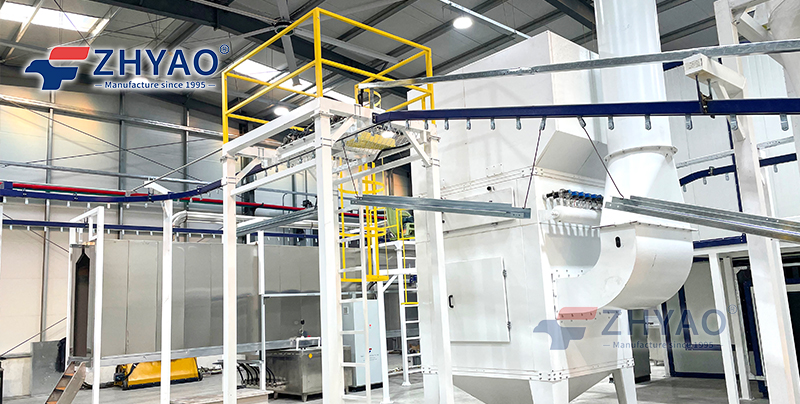
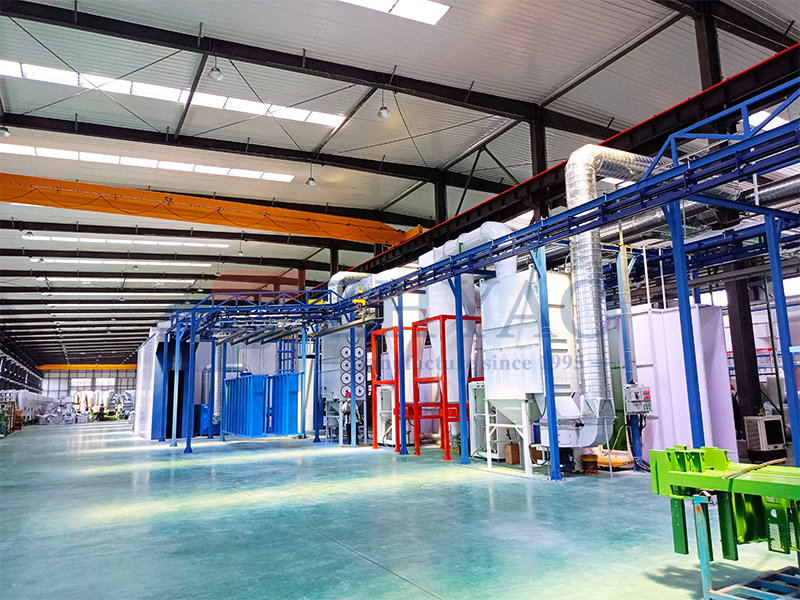
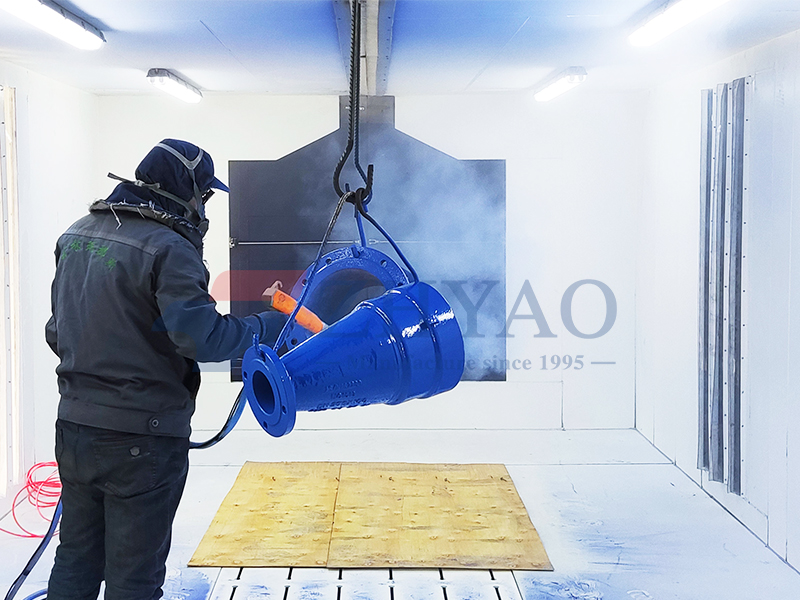
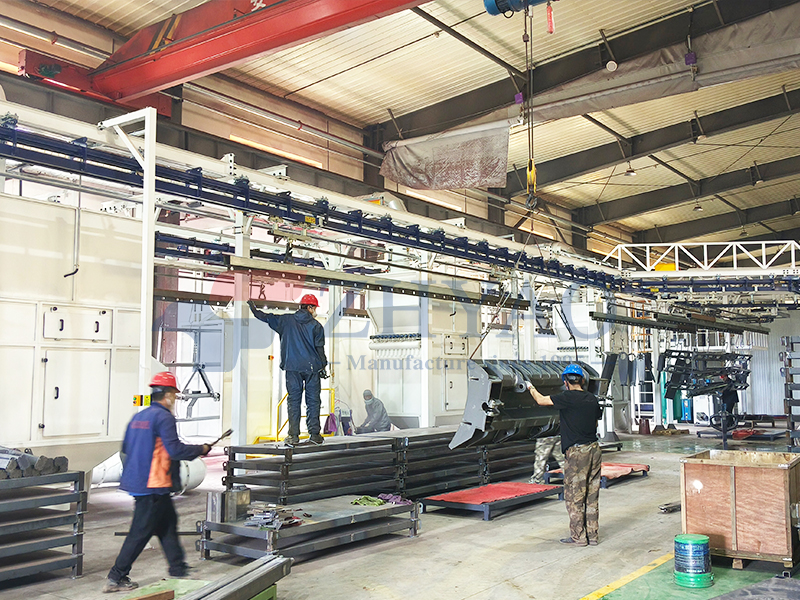
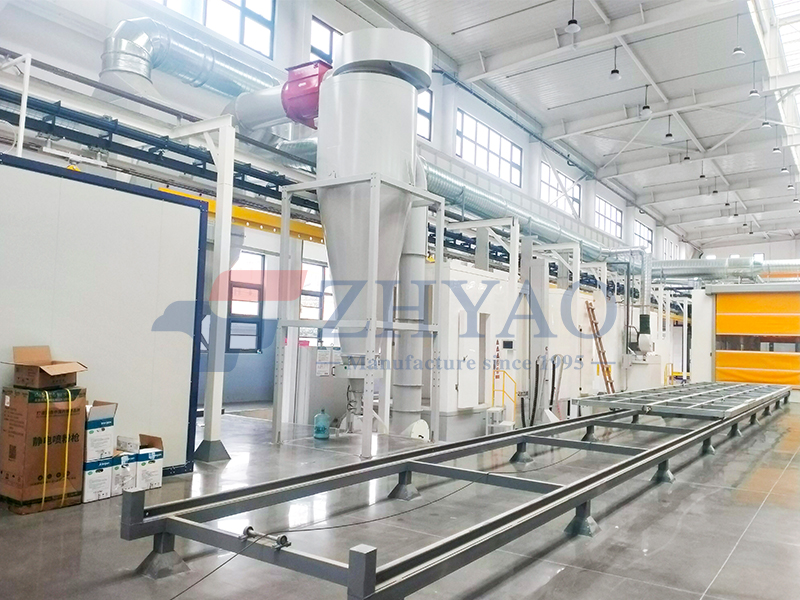
(On-site photos of the ZHYAO automatic powder coating line project)
Clarify the Supplier’s Scope Before Comparing Prices
The phrase “complete powder coating line” can conceal significant differences between quotations.
One proposal may include a broader range of auxiliary equipment, while another may exclude items that the buyer assumes are standard. The lower-priced proposal may still be suitable, but its total project cost cannot be evaluated accurately until the exclusions are identified.
Before comparing quotations, request a written scope-of-supply document covering:
All equipment and accessories included in the price.
Electrical control systems and the extent of system integration.
Installation, commissioning, and training responsibilities.
Factory utilities and infrastructure to be provided by the buyer.
Local transportation, unloading, lifting, and installation arrangements.
Environmental and waste-treatment facilities, where applicable.
Optional items, excluded services, and potential additional charges.
Warranty conditions, spare parts, and after-sales support.
The purpose is not to insist that every service must be included in the supplier’s price. It is to make sure that every necessary task has an identified owner and a realistic cost.
Treat Factory Readiness as a Separate Project Milestone
Even when the equipment design is complete, the factory may not yet be ready for installation.
The site may require changes to the floor, building openings, ventilation, utility capacity, or equipment access routes. If these requirements are discovered only after the equipment has been manufactured or delivered, the project may experience avoidable delays.
The buyer and supplier should therefore agree on a factory-readiness checklist before production of the equipment begins.
This checklist should identify the site dimensions and access conditions that matter to the proposed layout, the utility requirements, the required foundations or supports, and the facilities that must be completed before installation. Where local contractors are responsible for the work, their responsibilities and completion dates should be coordinated with the equipment delivery schedule.
The important point is that factory preparation should not remain an informal assumption. It should be treated as a defined part of project planning, with clear responsibilities on both sides.
Define What Commissioning Must Prove
Commissioning should do more than confirm that the machines can be switched on.
For a turnkey powder coating project, the commissioning plan should reflect the functions and performance requirements agreed in the contract. Depending on the project, this may include checking equipment operation, conveyor movement, control functions, oven temperature performance, safety interlocks, and the coating results achieved on representative workpieces.
The buyer should pay particular attention to the difference between equipment specifications and production acceptance.
An oven reaching a specified air temperature, for example, does not by itself demonstrate that the workpieces receive the required curing conditions. Similarly, a conveyor operating at its design speed does not automatically prove that the entire production process can sustain the required output.
Acceptance criteria should be specific enough to test the agreed requirements under defined conditions. Relevant workpieces, coating materials, test procedures, measurement methods, and responsibilities should be agreed in advance where they affect the result.
Not every project needs an elaborate performance test. The appropriate level of testing depends on the project’s complexity and contractual requirements. What matters is that both parties understand how successful completion will be judged before commissioning begins.
Prevent Schedule Disputes With Clear Project Milestones
A turnkey project usually involves several stages, including design confirmation, equipment manufacturing, delivery, site preparation, installation, commissioning, and handover.
Delays can occur when one stage depends on work that has not been completed in another. For example, equipment installation may be postponed if the factory is not ready, while commissioning may be delayed if utilities or supporting facilities are unavailable.
A project schedule should therefore identify the key milestones, the party responsible for each task, and the conditions required before the next stage can begin.
The contract should also explain how changes to the project scope affect the schedule. If the buyer changes the workpiece range, layout, or production requirements after design approval, additional engineering or manufacturing work may be necessary. Such changes should be documented rather than handled through informal assumptions.
Clear milestones do not eliminate every delay, but they make dependencies visible and help both parties identify problems before they affect the entire project.
Evaluate the Supplier’s Ability to Manage Interfaces
A turnkey supplier’s value is not limited to supplying individual machines. It also depends on how effectively the supplier coordinates the interfaces between equipment, services, and project participants.
During supplier evaluation, buyers should ask who is responsible when two parts of the project do not work together as intended. Who coordinates the control interface between the conveyor and the process equipment? Who investigates a problem that appears to involve both the curing oven and the production schedule? Who manages the correction if an agreed function cannot be demonstrated during commissioning?
The answers should be consistent with the written project scope.
A supplier does not necessarily have to manufacture every component or perform every local installation task. Specialized subcontractors may be entirely appropriate. The critical issue is whether coordination responsibilities are clear and whether the buyer knows whom to contact when an integration problem occurs.
Buyers should also review the supplier’s relevant project experience, technical documentation, communication arrangements, and after-sales support. These factors help assess the supplier’s ability to manage the project as a whole rather than simply deliver equipment.
The Lowest Initial Price May Not Mean the Lowest Project Cost
A turnkey project should be evaluated according to its total cost, not only the equipment quotation.
Additional installation work, factory modifications, utility connections, commissioning services, and missing accessories can increase the initial budget. After production begins, energy consumption, maintenance, spare parts, powder waste, and downtime may affect operating costs.
A useful comparison separates costs into three categories:
Initial project cost: Equipment, transportation, installation, site preparation, utilities, and other required project work.
Operating cost: Labor, energy, consumables, maintenance, and routine replacement parts.
Production risk: Potential losses associated with delays, unreliable operation, inadequate process performance, or limited technical support.
These categories should not be combined into an unsupported single estimate. Instead, buyers should identify which costs can be confirmed from quotations, which depend on actual operating conditions, and which risks need to be addressed contractually.
A higher-priced proposal may offer a more complete scope and clearer delivery commitments. Alternatively, a lower-priced proposal may provide better value if the buyer already has the facilities and technical resources needed to manage excluded work. The right decision depends on the complete project circumstances.
A Practical Checklist Before Signing the Contract
Before approving a turnkey powder coating project, confirm that the following questions have clear answers:
Is the agreed equipment and service scope documented?
Are exclusions and buyer responsibilities explicitly listed?
Have factory-readiness requirements been confirmed?
Are delivery, installation, commissioning, and handover milestones defined?
Are the acceptance criteria measurable and agreed by both parties?
Is there a documented process for handling design changes and additional costs?
Are warranty conditions, spare parts, and after-sales support clearly specified?
Does the contract identify who is responsible for coordinating equipment interfaces?
If any of these points remain unclear, resolve them before signing the contract rather than relying on verbal assurances.
A successful turnkey powder coating project is not defined solely by whether all the equipment arrives at the factory. It is defined by whether the agreed scope, responsibilities, schedule, and acceptance requirements are managed clearly enough for the buyer to take delivery of a usable production system.
FAQ
1. Does a turnkey powder coating solution always include installation and commissioning?
No. The scope varies by supplier and contract. Some proposals include installation, commissioning, and operator training, while others cover equipment supply only or offer these services separately. Buyers should confirm the exact scope in writing before placing an order.
2. How can buyers reduce unexpected costs in a turnkey powder coating project?
Request a detailed scope-of-supply document, confirm factory-readiness requirements, identify excluded items, and assign responsibility for every major project task. Also agree on commissioning procedures, acceptance criteria, and how changes to the project will affect the price and schedule.
- Previous:Best Powder Coating Line Configuration for Factories: How to Match Equipment to Production Needs
- Next:Powder Coating Lines: Can They



 customer service