
- When Should You Invest in an Automatic Powder Coating Line?
- Powder Coating Lines: Can They Be Customized to Meet Different Production Requirements?
- Turnkey Powder Coating Solutions: How to Avoid Hidden Costs and Project Delays
- Best Powder Coating Line Configuration for Factories: How to Match Equipment to Production Needs
- How to Compare Different Powder Coating Line Quotations
phone:+8618533267656
WhatsApp:+8618032661886
Email:info@powder-coatingline.com
Address:No. 55, Airport Road, Changshou Street, Xinle City, Shijiazhuang, Hebei Province
When Should You Invest in an Automatic Powder Coating Line?
There is no fixed production volume at which a factory must switch to an automatic powder coating line. A manufacturer producing large batches of identical metal components may benefit from automation, while a factory handling frequent small orders and complex workpieces may be better served by a manual or semi-automatic system.
The decision should be based on three questions: Is the current coating process limiting production? Can the equipment operate efficiently under your normal order conditions? Will the expected benefits justify the investment?
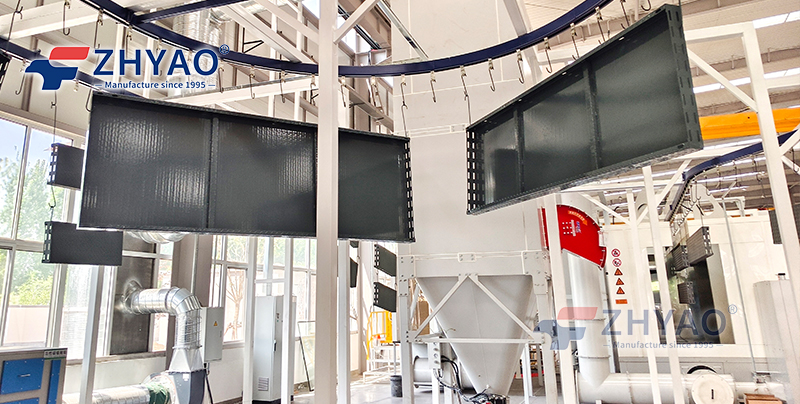
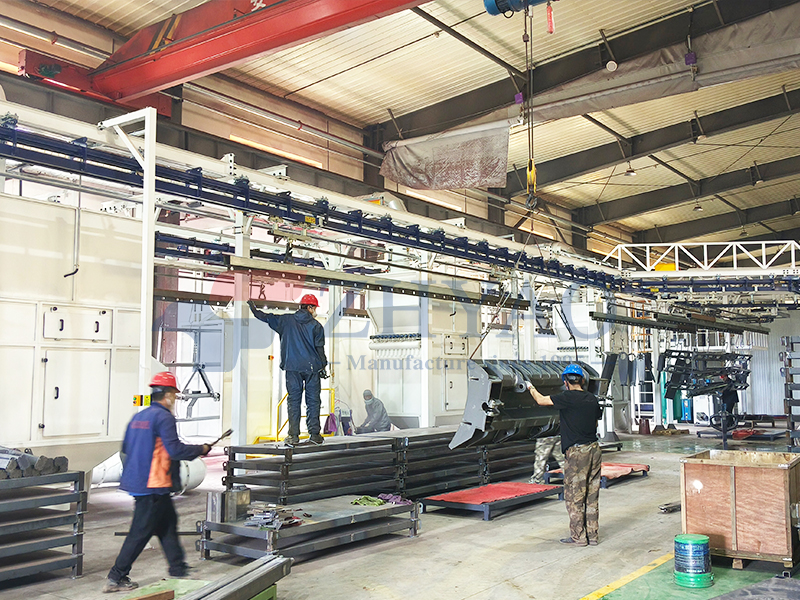
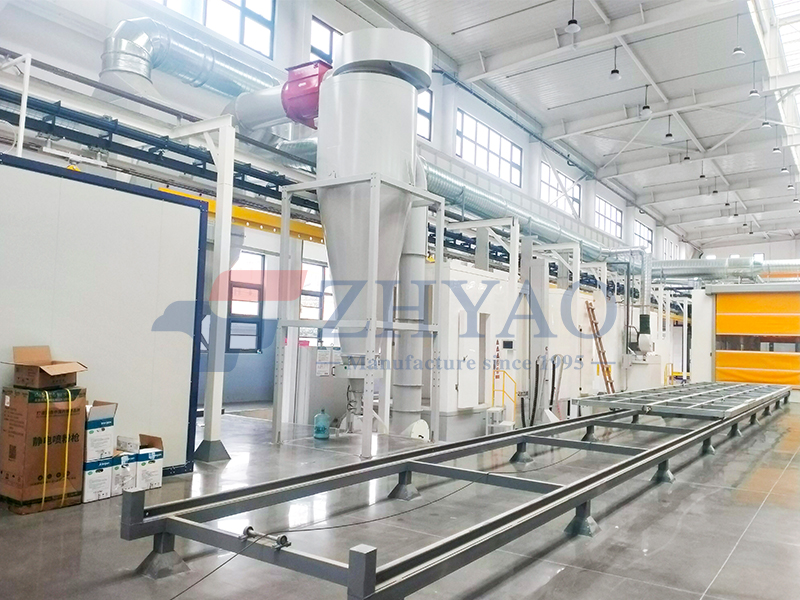
(ZHYAO Express Sorting Rack Automatic Powder Coating Line Project)
1. Stable Production Makes Automation More Attractive
Automatic powder coating is generally easier to justify when a factory repeatedly coats similar products in predictable production runs.
For example, manufacturers producing metal cabinets, electrical enclosures, or standard metal components may be able to maintain consistent workpiece spacing, spray settings, and conveyor speeds. This makes repetitive spraying easier to automate and helps reduce variations caused by manual operation.
However, a high daily output does not guarantee a good return. If orders are irregular and the equipment sits idle for long periods, the investment may take longer to recover.
Before purchasing a line, review your annual production volume, operating schedule, average batch size, and proportion of repeat orders. The objective is to estimate how much the equipment will actually be used, rather than relying on its rated capacity.
2. Frequent Product Changes Can Reduce the Benefits
Factories producing many different products face a different challenge.
Changes in workpiece dimensions, shapes, and hanging arrangements may require adjustments to spray gun positions and process settings. Frequent powder color changes can also increase cleaning time, depending on the booth and recovery system.
These interruptions reduce the time available for productive spraying.
In such cases, a fully automatic line is not necessarily the best choice. A semi-automatic system may offer a better balance between productivity and flexibility, particularly when manual loading, unloading, or touch-up is still required.
Automation can still work well with multiple product types, but the system must be designed around the actual product mix and changeover requirements.
3. Check Whether Automation Will Solve Your Main Production Problem
Before investing, identify the bottleneck in your existing process.
If manual spraying limits output, automatic spray guns or reciprocators may help.
If workpiece movement is inefficient, improving the conveyor or handling system may have a greater impact.
If curing capacity is insufficient, increasing spraying speed alone will not solve the problem.
If coating defects cause frequent rework, investigate their causes before assuming that automation will eliminate them.
An automatic powder coating line must work as an integrated production system. Improving one stage does not necessarily increase finished-product output if another stage remains the limiting factor.
4. Compare the Total Cost With the Expected Benefits
The investment decision should consider more than the equipment purchase price.
Evaluate the initial equipment and installation costs against expected annual benefits, including labor savings, reduced rework, improved production consistency, and any additional output that can realistically be sold.
Also account for electricity or gas consumption, maintenance, spare parts, training, and equipment downtime.
A simple payback estimate is:
Payback period = Initial investment ÷ Annual net savings
Annual net savings should account for the additional operating costs of the automatic system. If labor is not actually reduced and production demand remains unchanged, the financial benefit may be smaller than expected.
For this reason, use your own production and cost records wherever possible. A supplier's estimated capacity or projected savings should be checked against your products, operating hours, and production requirements.
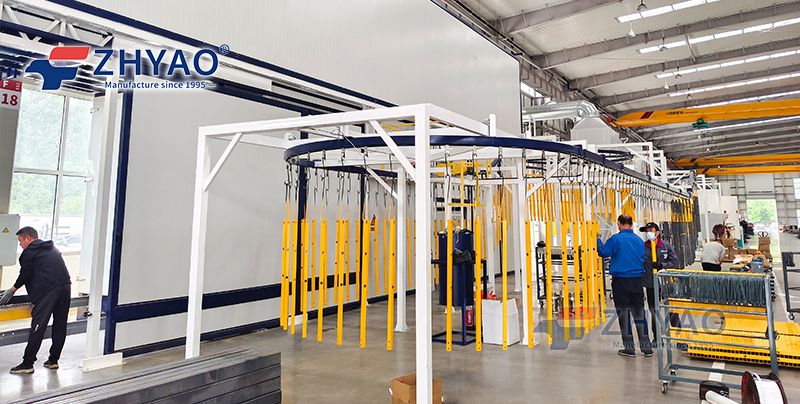
5. Choose the Automation Level That Fits Your Factory
Manual, semi-automatic, and fully automatic systems serve different production needs.
Manual spraying may remain practical for small batches, irregular orders, and products requiring frequent operator adjustments.
Semi-automatic equipment can be suitable when repetitive spraying or conveying needs improvement, but manual handling remains useful.
A fully automatic line is more attractive when production is relatively stable, workpieces can be handled consistently, and the expected workload supports regular equipment use.
If your factory already has suitable pretreatment equipment, conveyors, or curing ovens, upgrading selected sections may be more economical than replacing the entire line. However, compatibility and remaining equipment capacity must be assessed before choosing this approach.
The right solution is the one that addresses your actual production constraints without introducing unnecessary investment or complexity.
Conclusion
An automatic powder coating line is worth considering when the existing process cannot meet production requirements efficiently, the workload is sufficiently stable, and automation offers measurable operating benefits.
Rather than choosing equipment based on a general production threshold, assess your product mix, annual workload, main production bottleneck, and expected return on investment. These factors provide a more reliable basis for deciding whether to retain manual spraying, introduce semi-automation, or invest in a fully automatic line.
FAQ
1. What production volume justifies an automatic powder coating line?
There is no universal threshold. The decision depends on production stability, workpiece characteristics, labor costs, color-change frequency, and annual equipment utilization. A factory with repeat orders and consistent production may benefit from automation sooner than one with irregular, frequently changing orders.
2. Is a semi-automatic powder coating line suitable for a small factory?
It can be. A semi-automatic system allows factories to automate selected operations while retaining manual handling where flexibility is important. It may offer a practical balance between investment cost, production efficiency, and product variety.
-
2026-06-15How Much Does a Powder Coating Line Cost?



 customer service