
- How to Choose a Powder Coating Equipment Manufacturer for Your Factory
- How to Plan a Powder Coating Line Layout
- How to Select a Powder Coating Booth for Industrial Production
- How to Choose an Automatic Powder Coating Line Based on Production Capacity
- How to Choose the Right Powder Coating System for Metal Parts: Key Buying Decisions
phone:+8618533267656
WhatsApp:+8618032661886
Email:info@powder-coatingline.com
Address:No. 55, Airport Road, Changshou Street, Xinle City, Shijiazhuang, Hebei Province
How to Choose a Powder Coating Equipment Manufacturer for Your Factory
Choosing the right manufacturer involves more than comparing equipment prices. The real question is whether the supplier can design and deliver a coating system that fits your products, production capacity, and factory conditions.
Selecting a powder coating equipment manufacturer is an important decision when building a new coating line or upgrading an existing production facility. Different manufacturers may offer similar equipment, but their engineering capabilities, system configurations, and project experience can vary considerably.
A low quotation does not necessarily mean a lower project cost. If the equipment is poorly matched to the products or production requirements, problems may appear after installation, resulting in additional modifications, production interruptions, or higher operating costs.
The most reliable approach is to evaluate a manufacturer based on its ability to understand your production requirements, develop a suitable technical solution, and deliver a complete system.

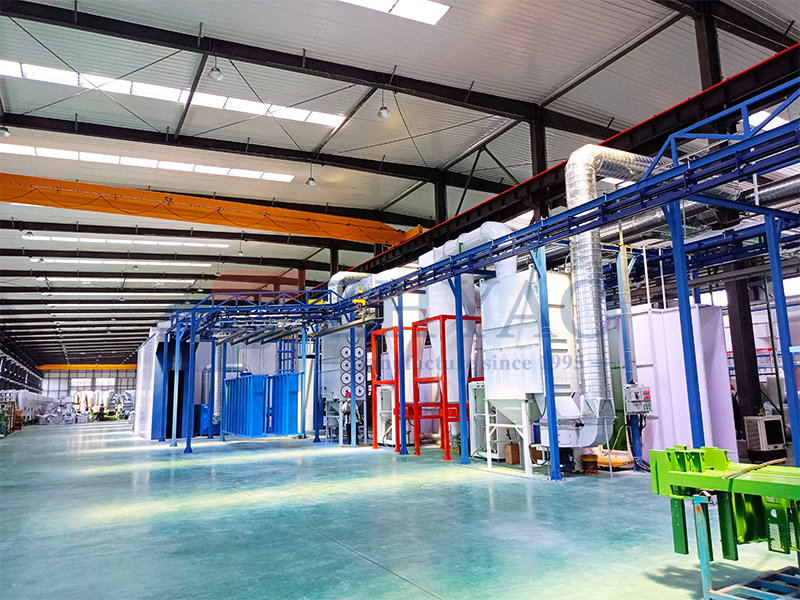
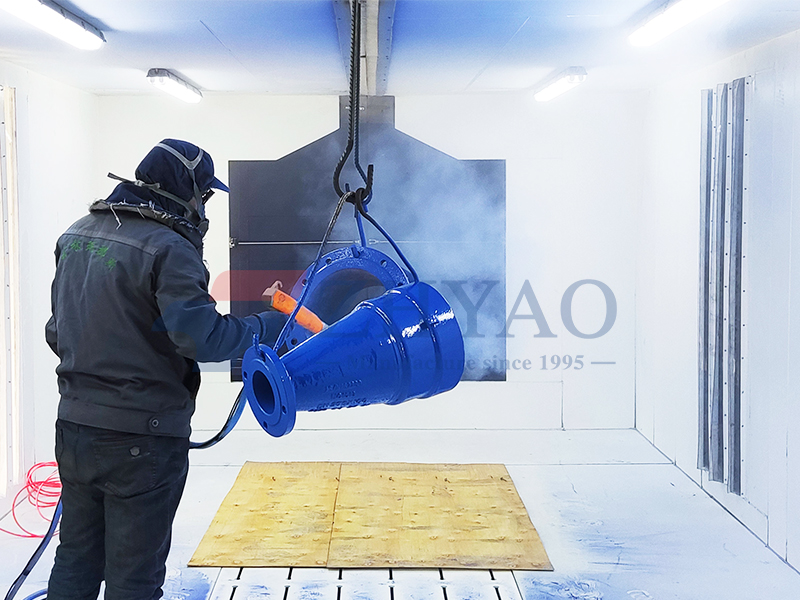
(ZHYAO Coating Equipment Manufacturer)
Understand Whether the Manufacturer Can Design for Your Products
Before comparing manufacturers, consider whether they understand the products you intend to coat.
Workpiece dimensions, weight, material, surface condition, and coating requirements directly influence equipment selection. A line designed for small metal components will not necessarily work for large steel structures, aluminum profiles, or heavy industrial parts.
For example, large workpieces may require wider spray booths, greater oven capacity, and a suitable conveyor arrangement. Products with complex geometries may need a combination of automatic spraying and manual touch-up to achieve consistent coverage.
A capable manufacturer should ask detailed questions about:
Maximum and minimum workpiece dimensions and weight.
Product materials and surface conditions.
Required coating quality and film thickness.
Daily production volume and operating hours.
Product variety and color-change frequency.
Available factory space and production layout.
These details provide the basis for equipment selection. If a supplier recommends a complete equipment configuration without understanding these requirements, the proposed solution may not be suitable for your factory.
Evaluate the Manufacturer's Complete Line Design Capability
A powder coating line is not simply a collection of individual machines. Its performance depends on how each process and piece of equipment works together.
A typical production line may include pretreatment, drying, powder spraying, curing, cooling, and conveying systems. Each section needs to match the requirements of the next.
When evaluating a manufacturer, find out whether it can design and coordinate the entire production process.
For example, the conveyor speed must correspond to the spraying and curing requirements. The curing oven must provide sufficient heating capacity and residence time for the workpieces. The spray booth and recovery system must also be configured according to the product dimensions, powder usage, and color-change requirements.
Ask the manufacturer to explain why specific equipment configurations have been selected and how they work together.
This is more useful than simply receiving a list of equipment models and technical parameters. A good proposal should explain the production logic behind the configuration.
Check Actual Project Experience, Not Just Product Catalogs
Project experience helps demonstrate whether a manufacturer has handled production conditions similar to yours.
However, the number of completed projects alone does not tell you everything. What matters is whether the manufacturer has experience with comparable products, coating processes, and production requirements.
When reviewing project cases, pay attention to:
Whether the workpieces are similar to yours in size, weight, and structure.
Whether the coating process matches your production requirements.
What equipment configuration was used and why.
Whether the project involved automatic spraying, manual spraying, or both.
Whether the complete production line was delivered and commissioned.
For example, a manufacturer experienced in coating small hardware components may have limited experience with large pressure vessels or heavy structural steel parts. These applications involve different requirements for conveying, workpiece handling, spray coverage, and oven design.
If possible, request project videos, equipment photographs, and references from customers with similar production needs.
The purpose is not simply to see what the manufacturer has built, but to understand whether its previous experience is relevant to your project.
Visit the Factory and Understand Its Manufacturing Capabilities
A manufacturer's actual production capabilities are worth examining before making a purchasing decision.
If possible, arrange a factory visit. Observe its production workshops, equipment assembly areas, engineering facilities, and quality inspection procedures.
Pay attention to whether the company has its own engineering and manufacturing teams or relies heavily on external suppliers for major project components.
This does not mean every component must be manufactured in-house. Some standardized electrical, pneumatic, and control components are normally sourced from specialized suppliers. What matters is whether the manufacturer can manage these components, integrate them properly, and maintain responsibility for the complete system.
You can also ask how the company handles:
Mechanical and electrical design.
Equipment fabrication and assembly.
Component inspection and quality control.
System integration and testing.
Project scheduling and delivery.
A factory visit provides a clearer picture of how the manufacturer organizes production and manages projects than a product brochure alone.
Compare Technical Proposals Before Comparing Prices
When you receive quotations from several manufacturers, avoid comparing only the final prices.
Different suppliers may use different equipment configurations, materials, automation levels, and technical standards. Two quotations with similar descriptions may represent substantially different systems.
For a meaningful comparison, check whether each proposal clearly specifies:
Equipment scope and configuration.
Conveyor type and operating speed.
Spray booth structure and powder recovery method.
Curing oven dimensions and heating system.
Pretreatment process and required equipment.
Electrical control and automation configuration.
Installation, commissioning, and operator training.
Also check whether important equipment or services are excluded from the quotation.
For instance, one supplier may include installation and commissioning, while another may quote only for equipment manufacturing and delivery. Comparing their prices directly would give you an incomplete picture.
A suitable solution should meet the actual production requirements without unnecessary equipment or excessive investment.

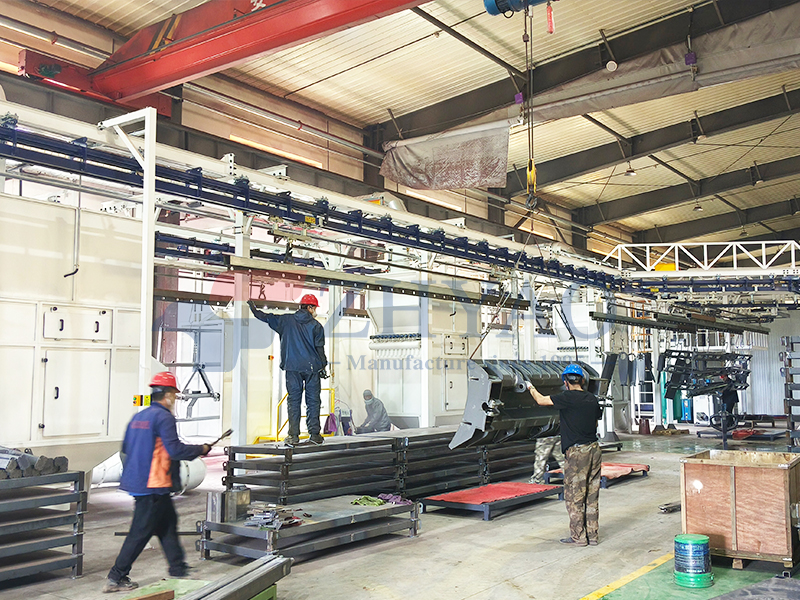
(ZHYAO Painting Equipment Production Workshop)
Evaluate Installation, Commissioning, and After-Sales Support
Equipment delivery is not the end of a coating line project.
After installation, the system needs to be commissioned to ensure that conveying, spraying, curing, and other processes operate according to the agreed requirements.
Ask the manufacturer how installation and commissioning are arranged. Clarify whether technical personnel will provide on-site support, what commissioning work is included, and whether operators will receive necessary training.
After the production line starts operating, technical support also matters.
You should understand the warranty period, spare parts arrangements, troubleshooting procedures, and availability of technical assistance.
A manufacturer with a clear service process can help reduce the difficulties associated with equipment maintenance and future production adjustments.
Consider the Total Project Cost, Not Only the Initial Investment
The purchase price is only one part of the cost of a powder coating line.
An unsuitable configuration may lead to additional expenses during installation or operation. For example, insufficient oven capacity can restrict production speed, while an unsuitable conveyor system may make workpiece loading and unloading inefficient.
On the other hand, excessive automation or unnecessarily complex equipment can increase initial investment and maintenance requirements without providing corresponding production benefits.
When comparing manufacturers, consider the relationship between:
Initial equipment investment.
Installation and commissioning costs.
Energy consumption.
Labor requirements.
Routine maintenance.
Expected production capacity.
Potential costs of future modifications.
The objective is not to purchase the cheapest system or the most automated one. It is to select a configuration that provides a reasonable balance between investment, production efficiency, and long-term operating costs.
Make Your Decision Based on Engineering and Delivery Capability
Choosing a powder coating equipment manufacturer requires looking beyond product specifications and quotation prices.
A reliable supplier should be able to understand your products, assess your factory conditions, design a coordinated production process, and take responsibility for equipment manufacturing, installation, and commissioning.
Before making a final decision, compare the technical proposals, verify relevant project experience, understand the manufacturer's production capabilities, and clarify the scope of after-sales support.
Ultimately, the value of a manufacturer is reflected not only in the equipment it supplies, but also in how well the complete coating line performs under actual production conditions.
Frequently Asked Questions
1. What should I look for when choosing a powder coating equipment manufacturer?
Look for experience in complete coating line design, relevant project cases, manufacturing capabilities, technical support, and installation and commissioning services. The manufacturer should be able to develop a solution based on your products and production requirements.
2. Should I choose a local or overseas powder coating equipment manufacturer?
Both options can be suitable. Consider engineering capabilities, project experience, delivery arrangements, installation support, communication efficiency, and long-term technical service rather than location alone.
3. How can I compare quotations from different powder coating equipment manufacturers?
Compare equipment configurations, technical specifications, automation levels, installation scope, commissioning services, warranty terms, and operating costs. Make sure the quotations cover comparable project scopes before evaluating the prices.
- Previous:How to Plan a Powder Coating Line Layout
- Next:Not available
-
2026-10-29How to Plan a Powder Coating Line Layout



 customer service