
- How to Choose a Powder Coating Equipment Manufacturer for Your Factory
- How to Plan a Powder Coating Line Layout
- How to Select a Powder Coating Booth for Industrial Production
- How to Choose an Automatic Powder Coating Line Based on Production Capacity
- How to Choose the Right Powder Coating System for Metal Parts: Key Buying Decisions
phone:+8618533267656
WhatsApp:+8618032661886
Email:info@powder-coatingline.com
Address:No. 55, Airport Road, Changshou Street, Xinle City, Shijiazhuang, Hebei Province

ZHYAO provides customized diamond saw blade painting lines with integrated conveying, surface preparation, spraying, drying and curing systems. Designed for your production capacity, coating requirements and factory layout.
Customized Industrial Painting Solutions for Diamond Saw Blade Manufacturers
A diamond saw blade painting line is designed to apply protective or decorative coatings to saw blade surfaces through a controlled industrial painting process. Depending on the coating requirements, the line can integrate workpiece loading, surface preparation, spraying, flash-off, drying, curing, cooling and unloading.
For diamond saw blade manufacturers, a suitable painting line helps maintain consistent coating quality, improve production efficiency and reduce repetitive manual handling.
ZHYAO provides customized industrial painting lines based on workpiece characteristics, coating requirements, production capacity and factory layout. Each system is designed to match the actual production process rather than follow a fixed equipment configuration.
Diamond Saw Blade Painting Line Configuration
A complete painting line consists of several interconnected systems. The specific equipment configuration depends on the workpiece, coating process, production capacity and available factory space.
Loading and Workpiece Handling System
The loading system transfers workpieces into the production line and positions them for subsequent processing.
Fixtures, racks or other workpiece handling devices can be designed according to the dimensions, weight and shape of the products.
For diamond saw blades, the loading arrangement should provide stable positioning and suitable access to the surfaces requiring coating.
Conveyor System
The conveyor system connects the different stages of the painting process and determines how workpieces move through the production line.
Depending on the production requirements and factory layout, available options include:
Overhead chain conveyor
Ground rail conveyor
Floor-mounted conveyor
Electric hoist conveyor
Customized workpiece transfer systems
The conveyor type, loading spacing and operating speed are selected according to workpiece characteristics, production capacity and the layout of the equipment.
Surface Preparation System
Surface preparation is an important step in achieving reliable coating adhesion.
The preparation process depends on the condition of the workpiece, the coating specification and the required surface quality.
Possible processes include:
Degreasing and cleaning
Mechanical sanding
Shot blasting
Other customized surface preparation processes
Not every painting line requires all these processes. The appropriate preparation method is determined according to the actual workpiece and coating requirements.
Painting Booth
The painting booth provides a controlled environment for the spraying process.
Its configuration depends on the paint type, spraying method, production output and environmental requirements.
Dry Filter Painting Booth
A dry filter booth uses filtration media to capture paint overspray. It is suitable for applications where dry filtration meets the required operating and environmental conditions.
Water Curtain Painting Booth
A water curtain booth uses a water-based capture system to collect paint overspray. Its suitability depends on the paint system, operating conditions and wastewater treatment requirements.
The booth structure, airflow and filtration system are designed according to the specific painting process.
Spraying System
The spraying system applies the coating to the workpiece.
Depending on the production requirements, the line can be equipped with:
Automatic spray guns
Reciprocators
Manual spray stations
Robotic spraying systems
Automatic spraying is suitable for applications requiring repeatable coating operations and consistent production.
Manual spraying can be used for smaller production volumes, flexible operations or areas requiring operator intervention.
Robotic spraying may be considered when workpiece geometry, spraying paths or production flexibility require a more adaptable application system.
The spraying method is selected according to the workpiece shape, coating requirements and production capacity.
Drying and Curing System
The drying and curing system is designed according to the properties of the selected paint.
Depending on the coating process, the line may include flash-off zones, drying ovens, curing ovens or integrated thermal processing sections.
The system can be configured with different heating methods, including:
Electric heating
Natural gas heating
Other suitable heating systems
The required temperature, heating profile and residence time must follow the paint manufacturer's technical data and the coating specification.
A suitable oven configuration helps ensure that the coating reaches the required performance without unnecessary energy consumption or excessive thermal exposure.
Exhaust and Filtration System
The exhaust system removes paint mist, solvent vapor or other process emissions generated during painting and drying.
The system configuration depends on the paint type, production process, emission requirements and factory conditions.
Ventilation, filtration, exhaust ducting and treatment equipment are selected according to applicable environmental and safety requirements.
Electrical Control System
The electrical control system coordinates the operation of the production line.
A PLC-based control system with a touch-screen interface can be used to manage conveyor operation, spraying equipment, oven temperature and other process parameters.
Depending on the project requirements, the system can include:
Process parameter adjustment
Conveyor speed control
Temperature monitoring
Equipment interlocking
Operating status monitoring
Fault alarms
The control configuration is customized according to the equipment arrangement and the required level of automation.
Diamond Saw Blade Painting Process
The painting process is determined by the selected coating system and the required coating performance.
A typical process may include:
Loading → Surface Preparation → Drying → Primer Spraying → Flash-Off → Topcoat Spraying → Flash-Off → Drying or Curing → Cooling → Inspection → Unloading
For single-coat applications, the primer and topcoat stages may be simplified.
The actual process sequence, number of coating layers and thermal treatment requirements are confirmed according to the paint specification and production requirements.
Diamond Saw Blade Painting Line Configuration Range
The following table describes the main configuration options available for a customized painting line.
These are configuration choices rather than fixed specifications. Actual parameters are confirmed according to the project requirements.
Item | Configuration Range |
Blade diameter | Ø100 – 400 mm typical; larger diameters on request |
Blade thickness | 1.0 – 10 mm |
Loading method | Vertical stacking on rods / individual spindles / horizontal racks |
Conveyor type | Overhead chain / floor chain / intermittent hoist |
Conveyor speed | 0.5 – 4 m/min, VFD controlled |
Spraying method | Automatic reciprocator guns with manual touch-up / robotic spraying |
Booth type | Dry filter / water curtain |
Coating layers | Primer + topcoat, or single coat |
Paint type | Solvent-based or water-based |
Drying temperature | 50 – 90 °C (flash-off and surface drying) |
Curing temperature | 120 – 200 °C, according to paint data sheet |
Heating method | Electric / natural gas / diesel |
Control | PLC + touch screen with recipe memory |
Power supply | 380 V / 50 Hz three-phase, adjustable to local standard |
What Determines the Price of a Diamond Saw Blade Painting Line?
The price of a painting line depends on the complete equipment configuration and the requirements of the production process.
Several factors have a direct influence on the overall investment.
Production Capacity
Higher production capacity may require additional spraying equipment, longer drying or curing sections, and a conveyor system with a higher operating capacity.
The required output should be defined before determining the equipment configuration.
Workpiece Dimensions
Workpiece dimensions affect the size of the painting booth, conveyor arrangement, oven dimensions and workpiece handling system.
A line designed for a wider range of workpiece sizes may require more flexible equipment and additional adjustment capability.
Automation Level
Manual, semi-automatic and fully automatic production lines have different equipment requirements.
Automatic loading and unloading, robotic spraying and advanced control systems can increase the initial investment but may reduce repetitive manual operations.
Paint System and Environmental Requirements
Different paint systems require different spraying, drying, exhaust and filtration configurations.
Environmental requirements may also affect the selection of ventilation and emission treatment equipment.
Factory Layout
The available installation space, building height and existing production equipment influence the overall line arrangement.
A customized layout helps coordinate the equipment with the existing manufacturing process.
A reliable quotation should therefore be based on the actual production requirements rather than a single equipment description.
Information Required for a Painting Line Proposal
To prepare a suitable painting line proposal, ZHYAO engineers need the following information:
Workpiece dimensions and weight
Workpiece material and surface condition
Required production capacity
Paint type and coating specification
Number of coating layers
Required coating quality
Color change frequency
Factory dimensions and available installation space
Existing surface preparation or painting equipment
Local power supply and available heating energy
With this information, ZHYAO can evaluate the process requirements and prepare a customized equipment configuration, production line layout and quotation.
Reference Project: Diamond Saw Blade Painting Line in Thailand
ZHYAO delivered and commissioned a customized painting line for a diamond saw blade manufacturer in Thailand.
The project was configured according to the customer's production requirements and factory layout.

The equipment included:
Overhead chain conveyor system
Workpiece loading and handling sections
Dry-filter painting booth
Automatic spraying system
Manual touch-up station
Drying and curing tunnels
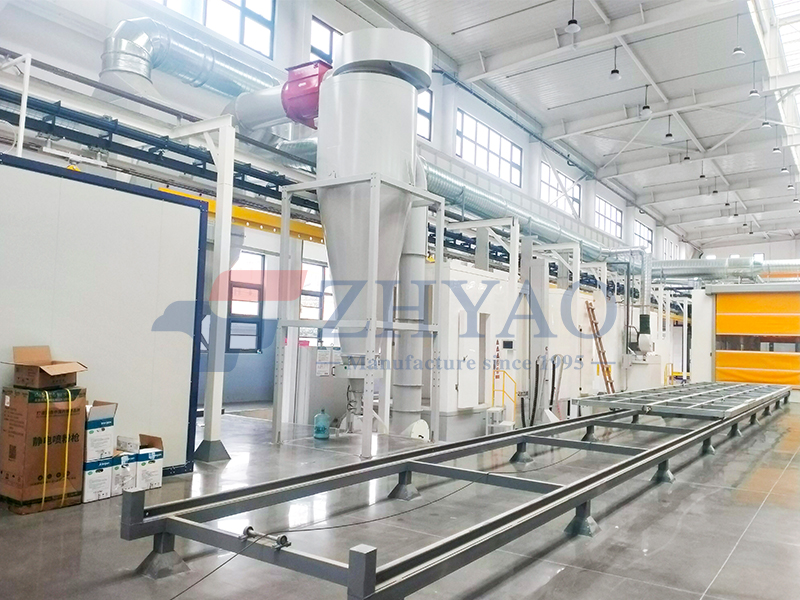
Exhaust and filtration system
PLC control system
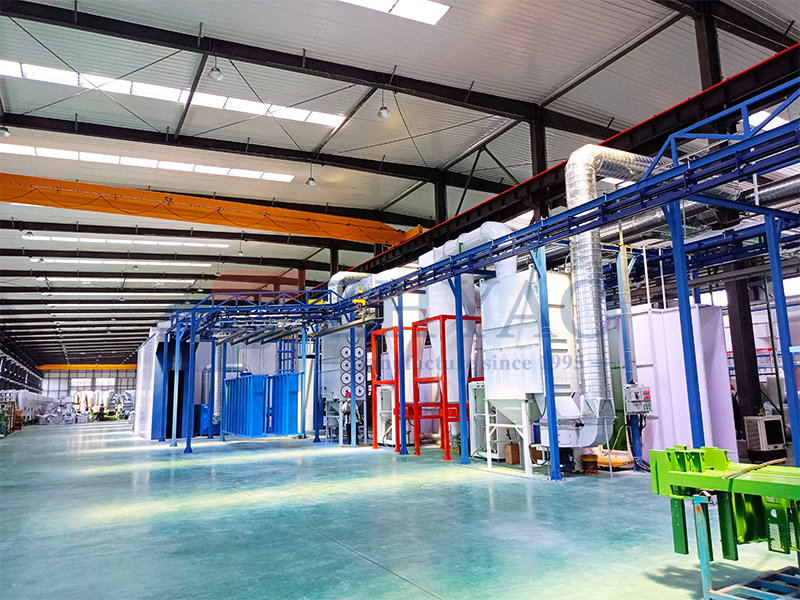
The elevated conveyor arrangement connected the different process sections while making use of the available factory space.
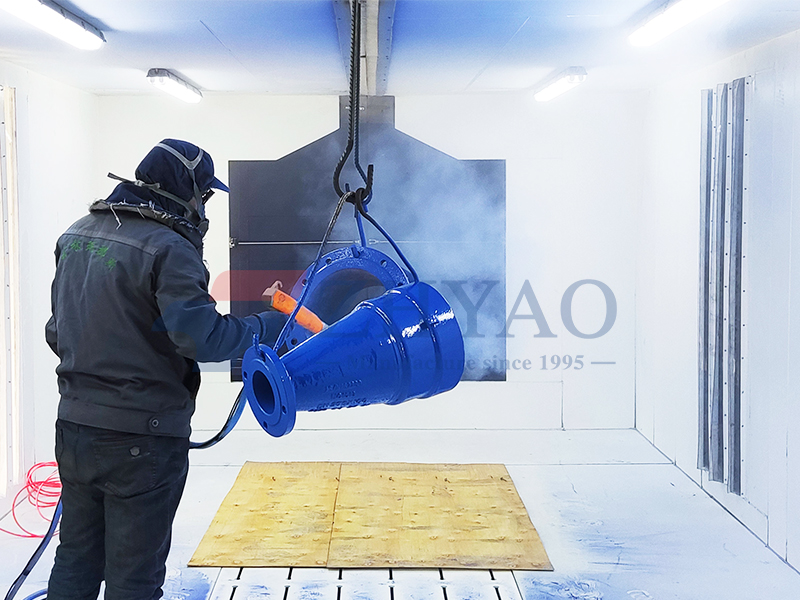
The spraying system combined automatic application with a manual touch-up position to accommodate the customer's coating requirements.
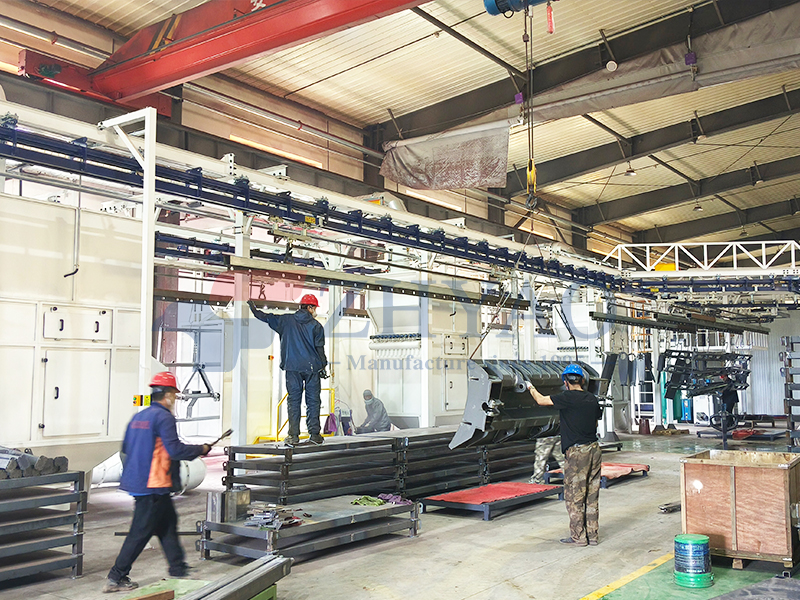
The project demonstrates how conveyor design, spraying equipment, thermal processing and factory layout can be coordinated within a customized painting line.
The configuration of your painting line may differ from this reference project. Equipment selection should be based on your workpiece dimensions, coating requirements, production capacity and available installation space.
Why Choose ZHYAO?
More Than 30 Years of Coating Line Experience
ZHYAO has been engaged in industrial coating equipment design and manufacturing since 1995, serving customers in more than 60 countries.
Customized Process Design
Each painting line is designed according to the workpiece, coating process, production capacity and factory layout.
The equipment configuration is developed around the actual production requirements rather than a standard catalog model.
Integrated Equipment Manufacturing
ZHYAO integrates spraying, conveying, drying, curing, exhaust and electrical control systems into customized coating production lines.
This integrated approach helps coordinate the different equipment sections throughout the production process.
Project Engineering Support
Support can cover process planning, equipment design, manufacturing, installation and commissioning according to the agreed project scope.
The objective is to provide a production line that matches the customer's manufacturing requirements.
Delivery and Support
Production Lead Time
Typically 45–90 days, depending on the equipment configuration, project scope and customization requirements.
Installation and Commissioning
Installation and commissioning support are provided according to the project scope and site conditions.
Warranty
24-month warranty according to the agreed project terms.
After-Sales Service
Technical support is available after the warranty period to assist with equipment operation and maintenance.
Frequently Asked Questions
Is a customized painting line suitable for small-scale production?
The suitability of an automated painting line depends on production volume, labor costs, coating requirements and the required level of flexibility.
For lower production volumes, a manual or semi-automatic painting system may be more economical.
For higher production volumes, automatic spraying and conveyor systems may help improve production efficiency and reduce repetitive manual operations.
The appropriate configuration should be evaluated according to the actual production requirements.
Can one painting line handle different workpiece sizes?
Yes. A painting line can be designed to handle a specified range of workpiece sizes.
The handling fixtures, spraying equipment, conveyor arrangement and process parameters need to accommodate the required range.
A wider size range may require additional adjustment capability and a different equipment configuration.
How do I choose between automatic, manual and robotic spraying?
The choice depends on workpiece geometry, production volume, coating requirements and production flexibility.
Automatic spraying is suitable for repeatable production processes.
Manual spraying is useful for flexible operations and areas requiring operator intervention.
Robotic spraying may be suitable for complex spraying paths or applications requiring greater flexibility.
The final selection should be based on the actual painting process.
Get a Customized Diamond Saw Blade Painting Line Proposal
Looking for a painting line for your production facility?
Share your workpiece dimensions, paint system, production capacity and factory layout with ZHYAO.
Our team can evaluate your requirements and provide a customized painting line configuration, equipment layout and quotation.
- Previous:Spray Painting Line
- Next:Not available



 customer service