
- Powder Coating Line ROI Analysis: What Should Manufacturers Calculate Before Investing?
- How to Expand an Existing Powder Coating Line
- How to Plan a New Powder Coating Workshop
- How to Choose the Right Pretreatment System for Your Factory
- How to Design an Industrial Spray Painting Line for Your Factory
phone:+8618533267656
WhatsApp:+8618032661886
Email:info@powder-coatingline.com
Address:No. 55, Airport Road, Changshou Street, Xinle City, Shijiazhuang, Hebei Province
How Much Does a Complete Powder Coating Line Cost for a Small Factory?
For many small manufacturers, installing an in-house powder coating line is an important step toward improving product quality, shortening delivery times, and reducing outsourcing costs. One of the first questions buyers ask is:
"How much does a complete powder coating line cost?"
The answer is not a single number. A complete powder coating line can range from approximately USD 50,000 for a basic manual system to over USD 300,000 for a semi-automatic production line, depending on production capacity, workpiece size, pretreatment requirements, automation level, and local installation conditions. Industry cost guides consistently show that throughput, automation, pretreatment design, and curing capacity are the primary factors affecting total investment.
Understanding what drives the investment helps small factories choose equipment that matches their production goals instead of paying for unnecessary capacity.
What Is Included in a Complete Powder Coating Line?
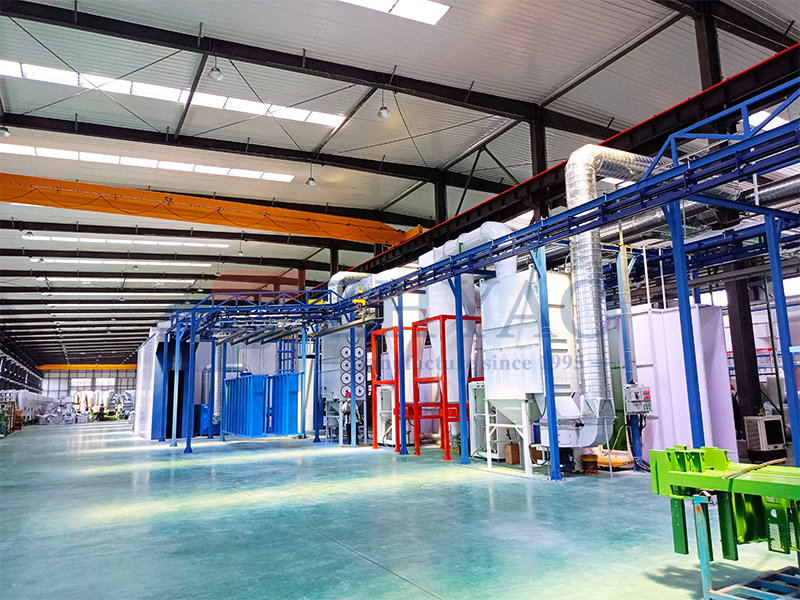
A complete powder coating production line is much more than a spray booth. Most systems include:
Drying oven (when required)
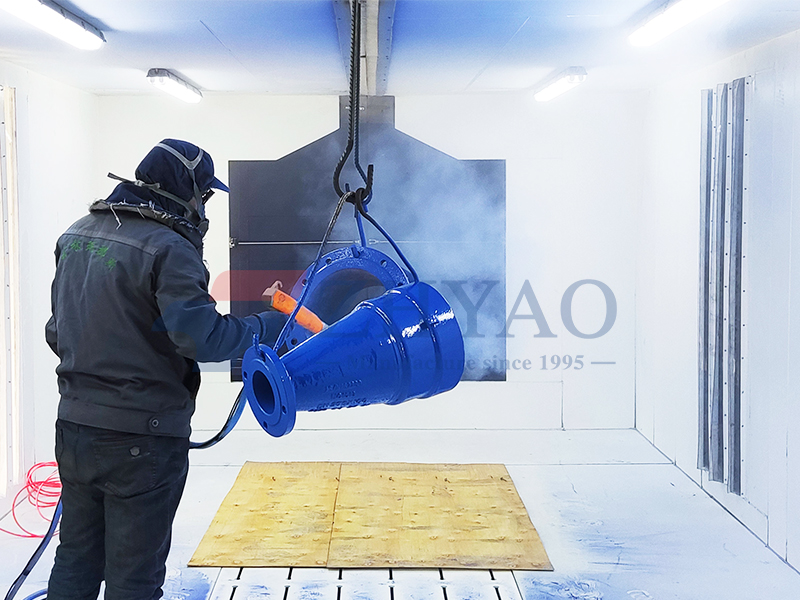
Powder coating booth
Electrostatic powder spray equipment
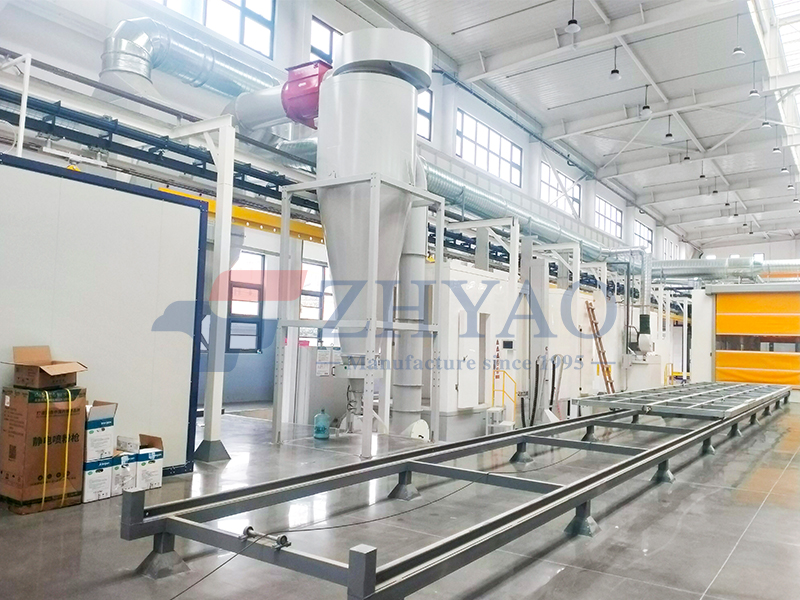
Powder recovery system
Curing oven
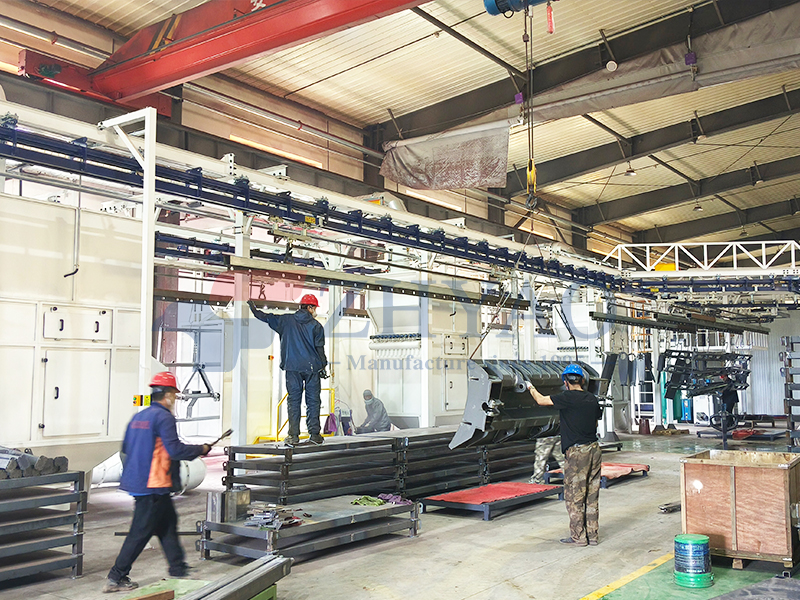
Conveyor or manual transport system
Electrical control cabinet
Air supply and auxiliary equipment
Each component affects production efficiency, coating quality, and long-term operating costs.
Typical Investment Range for Small Factories
Although every project is customized, the following ranges provide a useful starting point.

These figures generally include the primary production equipment but may not include shipping, local installation, civil works, or utility connections. Final pricing depends on the project's technical specifications.
Five Factors That Have the Biggest Impact on Cost
1. Production Capacity
The number of parts coated per hour is usually the largest cost driver.
A factory producing 200 parts per day requires a very different solution than one producing 2,000 parts per day. Larger throughput generally means longer conveyors, larger curing ovens, and higher-capacity powder recovery systems.
2. Size and Weight of Workpieces
Large products require larger spray booths, wider conveyors, and longer curing ovens.
For example:
Small hardware components
Shelving systems
Steel doors
Fence panels
Agricultural equipment
Although production volume may be similar, equipment dimensions can differ significantly.
3. Pretreatment Process
Surface preparation is essential for coating adhesion and corrosion resistance.
Depending on the product, the pretreatment system may include:
Degreasing
Water rinsing
Phosphating
Zirconium treatment
Drying
Simple manual dip tanks cost considerably less than fully automatic multi-stage spray pretreatment systems.
4. Automation Level
Automation directly influences both initial investment and long-term labor costs.
Small factories usually choose between:
Manual powder spraying
Manual conveyor systems
Semi-automatic reciprocators
Automatic powder guns
PLC-controlled conveyor systems
Many manufacturers begin with semi-automatic equipment and expand automation as production grows.
5. Powder Recovery System
Powder utilization has a direct impact on operating costs.
Small batch production with frequent color changes often uses cartridge filter recovery systems for easier cleaning.
Continuous production with a limited color range may benefit from cyclone recovery systems designed for higher recovery efficiency and productivity.
Selecting the appropriate recovery system depends on production requirements rather than choosing the most expensive option.

Costs Beyond Equipment
When planning a project, equipment price is only part of the total investment.
Additional costs may include:
Ocean freight
Installation and commissioning
Factory electrical upgrades
Compressed air system
Natural gas or electric heating
Operator training
Spare parts
Routine maintenance
Considering these expenses early helps avoid unexpected budget increases during installation.
How Small Factories Can Control Investment
Many small manufacturers do not need a fully automatic production line immediately.
A practical approach is to begin with equipment sized for current production while allowing room for future expansion.
Examples include:
Reserving space for additional spray guns
Selecting conveyors that can be extended later
Choosing control systems that support future automation
Designing curing ovens with potential capacity upgrades
This approach often provides better long-term value than purchasing oversized equipment at the beginning.
Should You Buy Standard Equipment or a Customized Line?
Standard equipment may appear less expensive initially, but it is not always the most economical solution.
If equipment dimensions, conveyor speed, or pretreatment processes do not match actual production requirements, manufacturers may experience:
Lower production efficiency
Increased powder consumption
More manual rework
Higher operating costs
A customized solution designed around the factory's products, production targets, and available space often delivers better operational efficiency throughout the equipment's service life.
Final Thoughts
For most small factories, investing in a powder coating line is a long-term production decision rather than simply purchasing equipment.
Instead of asking "What is the cheapest powder coating line?", a better question is:
"Which powder coating line matches my products, production capacity, factory space, and future growth plans?"
Providing details such as product dimensions, expected output, available workshop space, preferred heating method, and required coating quality allows equipment suppliers to recommend a solution that fits both technical requirements and budget expectations.
Frequently Asked Questions
Q1: What information should I prepare before requesting a quotation?
It is helpful to provide product dimensions, material type, daily production volume, factory layout, preferred heating source, and any special coating requirements. This information enables suppliers to recommend a suitable system configuration.
Q2: Can a small powder coating line be upgraded in the future?
Yes. Many systems are designed with modular components, allowing additional automation, conveyor extensions, or higher-capacity equipment to be added as production requirements increase.
- Previous:How to Choose the Right Powder Coating Line for Your Factory?
- Next:Is Automatic Spraying Equipmen
-
2026-09-04How to Plan a New Powder Coating Workshop
-
2026-08-31How to Choose a Powder Coating Line



 customer service