
- How to Choose the Right Powder Coating Line for Your Products
- Powder Coating Line Cost: New System vs. Upgrading an Existing Line
- How to Select a Pretreatment Line for Powder Coating Systems
- Is Automatic Spraying Equipment Suitable for Mass Production? The Answer Depends on Your Production
- How Much Does a Complete Powder Coating Line Cost for a Small Factory?
phone:+8618533267656
WhatsApp:+8618032661886
Email:info@powder-coatingline.com
Address:No. 55, Airport Road, Changshou Street, Xinle City, Shijiazhuang, Hebei Province
Why Does Powder Coating Peel Off? Causes and Solutions in Powder Coating Production
Powder coating peel off problems are common in metal finishing production, especially when surface preparation, curing temperature, or coating parameters are not properly controlled. In many powder coating production lines, powder coating peel off issues can lead to rework, coating failure, and unstable product quality.
Understanding why powder coating peels off is important for improving coating adhesion and maintaining stable production efficiency. In industrial powder coating systems, peeling problems are usually related to pretreatment quality, curing conditions, contamination, or improper coating thickness.
Common Causes of Powder Coating Peel Off
Several factors can cause powder coating adhesion failure during production. In most cases, the problem is not caused by a single factor, but by a combination of process issues.
Poor Surface Pretreatment in Powder Coating
Surface pretreatment is one of the most important steps in powder coating production. Oil, rust, dust, or moisture remaining on the workpiece surface can reduce coating adhesion.
Common pretreatment problems include:
Incomplete degreasing
Insufficient phosphating
Residual moisture after washing
Surface oxidation before spraying
If contaminants remain on the metal surface, the powder coating layer may separate from the substrate after curing or during operation.
For steel products, phosphating treatment is often used to improve coating adhesion and corrosion resistance. For aluminum products, chromate-free conversion coating or sandblasting may help improve surface bonding performance.

How Curing Problems Cause Powder Coating Peel Off
Incorrect curing temperature is another major reason for powder coating peel off.
If the curing oven temperature is too low, the powder may not fully melt and crosslink. In this condition, the coating surface may look normal, but the internal bonding strength remains weak.
On the other hand, overheating may damage the coating structure and reduce long-term adhesion performance.
Common curing issues include:
Uneven oven temperature distribution
Conveyor speed mismatch
Incorrect curing time
Poor hot air circulation
In continuous powder coating lines, temperature uniformity inside the curing oven directly affects coating stability.
Powder Coating Thickness and Adhesion Problems
Excessive coating thickness may also lead to peeling issues.
When powder coating is applied too thickly, internal stress inside the coating layer may increase during curing and cooling. This can reduce bonding strength between the coating and the metal surface.
Very thin coating layers may also create weak protection and poor edge coverage.
For many industrial products, maintaining stable film thickness is important for balancing appearance, adhesion, and durability.
Automatic reciprocators, powder feed systems, and electrostatic spray parameters all influence coating thickness consistency.
Contamination Problems in Powder Coating Production
Environmental contamination is another common cause of coating failure.
Possible contamination sources include:
Silicone oil
Dust particles
Compressed air impurities
Dirty hanging fixtures
Recycled powder contamination
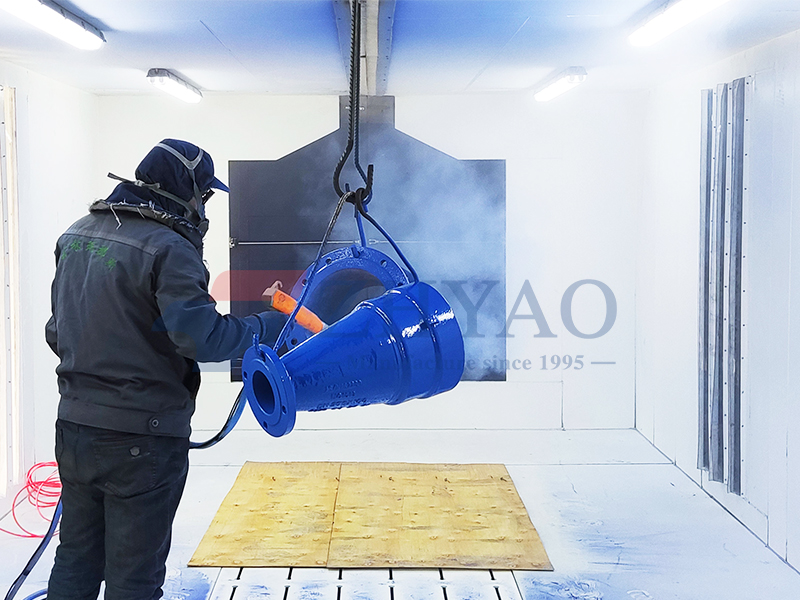
If the powder coating booth airflow is unstable, airborne contaminants may attach to the workpiece surface before curing.
Regular cleaning and airflow management can help reduce contamination risks in automatic powder coating systems.
How to Prevent Powder Coating Peel Off
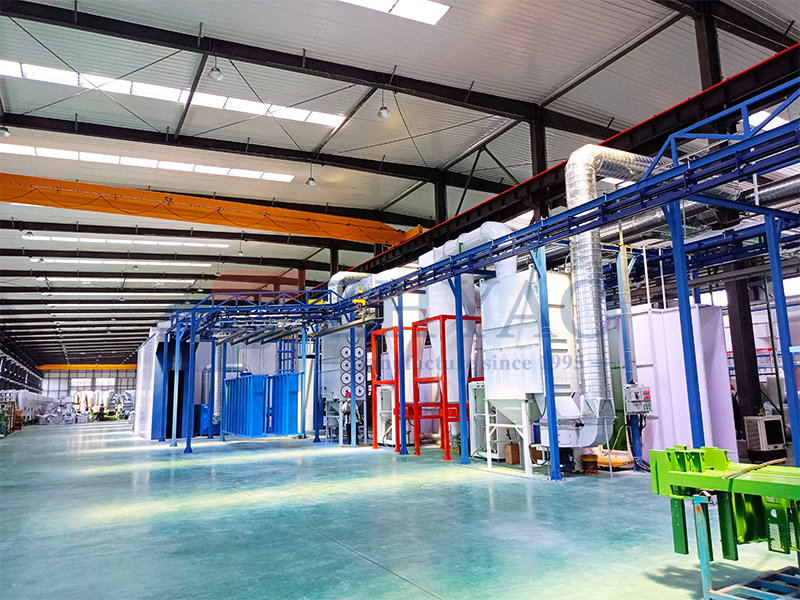
Preventing powder coating peel off requires stable process control across the entire powder coating line.
Recommended improvement measures include:
Improve Pretreatment Quality
Ensure complete oil and rust removal
Control washing water quality
Dry workpieces completely before spraying
Reduce oxidation between pretreatment and spraying
Optimize Powder Coating Curing Conditions
Check curing oven temperature regularly
Verify metal surface temperature
Maintain stable conveyor speed
Improve hot air circulation inside the oven
Control Coating Thickness
Adjust electrostatic spraying parameters
Maintain stable powder output
Avoid excessive powder accumulation
Monitor film thickness during production
Maintain Clean Production Conditions
Clean spray booths regularly
Check compressed air filtration
Maintain powder recovery systems
Reduce dust contamination in the workshop
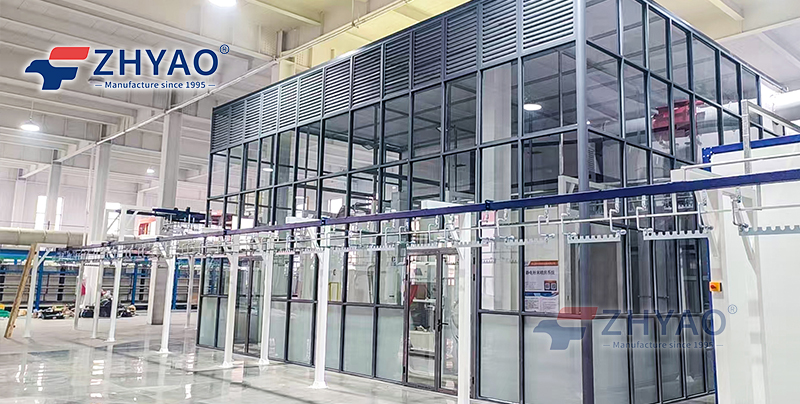
Why Stable Powder Coating Process Control Matters
In industrial powder coating production, peeling problems often indicate instability somewhere in the coating process.
A stable powder coating line should maintain consistency in:
Pretreatment quality
Spray parameters
Oven temperature
Conveyor operation
Powder recovery efficiency
Instead of only solving coating defects after they appear, many manufacturers focus on improving overall process stability to reduce long-term operating risks.
Conclusion
Powder coating peel off problems are usually related to pretreatment quality, curing conditions, coating thickness, or contamination control. Identifying the root cause is important for improving coating adhesion and maintaining stable production quality.
In modern powder coating production systems, stable process design and equipment coordination play an important role in reducing coating defects and improving operational reliability.
If you are evaluating a new powder coating line or optimizing an existing coating process, understanding the causes of powder coating peel off can help improve long-term coating performance and production efficiency.
- Previous:Powder Coating Curing Oven Design and Temperature Control
- Next:Orange Peel Effect in Powder C
-
2026-06-15How Much Does a Powder Coating Line Cost?
-
2026-06-11What Size Powder Coating Booth Do You Need?
-
2026-06-11How Does a Powder Coating Oven Work?
-
2026-06-03How Cyclone Powder Recovery Works



 customer service